

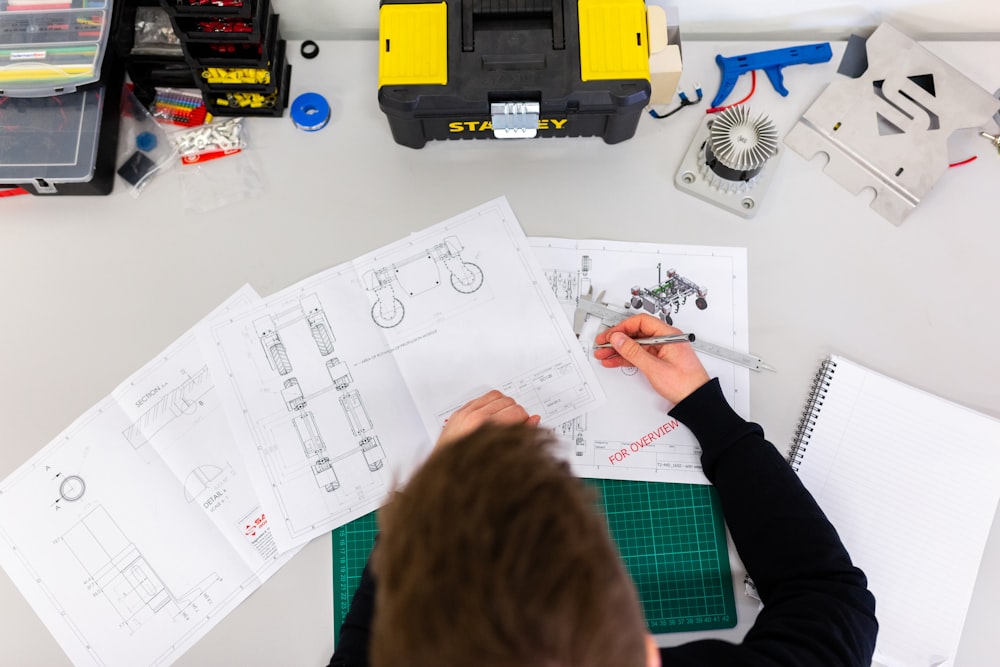


What is Robotics Engineering?
Robotics Engineering is a high-tech interdisciplinary branch of engineering that involves the design, construction, operation, and application of robots. It integrates principles from Mechanical Engineering, Electrical Engineering, Electronics, and Computer Science. In the era of Industry 4.0, Robotics Engineering focuses on creating intelligent machines that can assist humans in various sectors, including manufacturing, healthcare, space exploration, and defense.
Students in this field learn about automation, artificial intelligence, machine learning, kinematics, and sensor technology. With the rise of automation in India, this field has become one of the most sought-after specializations for tech-savvy students aiming for careers in high-end research and development.
Robotics Engineering - Highlights
| Parameter | Details |
|---|---|
| Full Form | Bachelor/Master of Technology in Robotics Engineering |
| Course Levels Available | Diploma, BTech/BE, MTech/ME, PhD |
| Duration | UG: 4 Years, PG: 2 Years, Diploma: 3 Years |
| Eligibility | UG: 10+2 with PCM (min 50-75%); PG: BTech/BE in relevant field + GATE |
| Top Entrance Exams | JEE Main, JEE Advanced, GATE, VITEEE, SRMJEEE, MET |
| Top Colleges | IIT Kanpur, IIT Bombay, IIIT Hyderabad, SRM IST, VIT Vellore |
| Average Fees Range (INR) | INR 2 Lakh - 15 Lakh (Total Course Fee) |
| Average Salary (INR LPA) | INR 5 LPA - 20 LPA |
| Popular Job Profiles | Robotics Engineer, Automation Engineer, Robotics Programmer, Research Scientist |
Robotics Engineering - Eligibility Criteria & Admission Process 2026
Admission to Robotics Engineering programs in India for the academic year 2026 follows a merit-based system through entrance examinations. The eligibility criteria vary by level:
- Undergraduate (BTech/BE): Candidates must have passed Class 12 with Physics, Chemistry, and Mathematics as core subjects. A minimum aggregate of 60% (75% for IITs/NITs) is generally required.
- Postgraduate (MTech/ME): Candidates must hold a BE/BTech degree in Robotics, Mechatronics, Mechanical, Electrical, or Computer Science with a valid GATE 2026 score.
- Diploma: Candidates must have completed Class 10 with at least 50% marks in Science and Mathematics.
The admission process typically involves appearing for a national or state-level entrance exam, followed by centralized counseling sessions like JoSAA (for IITs/NITs) or individual university counseling.
Top Entrance Exams for Robotics Engineering 2026
To secure a seat in a premier engineering institute, students must clear specific entrance exams. Below are the key exams for 2026:
| Exam Name | Level | Target Colleges |
|---|---|---|
| JEE Main 2026 | National | NITs, IIITs, and GFTIs |
| JEE Advanced 2026 | National | Indian Institutes of Technology (IITs) |
| GATE 2026 | National | MTech Admissions at IITs, NITs, and PSUs |
| BITSAT 2026 | University | BITS Pilani, Goa, Hyderabad |
| VITEEE 2026 | University | VIT University |
| SRMJEEE 2026 | University | SRM Institute of Science and Technology |
| MHT CET 2026 | State | Engineering Colleges in Maharashtra |
Types of Robotics Engineering Courses (BTech, MTech, Diploma, PhD)
- Diploma in Robotics: A 3-year course focusing on the practical and technical aspects of robot maintenance and basic design. Suitable for students after Class 10.
- BTech/BE in Robotics Engineering: A 4-year comprehensive degree covering theory, design, and programming. This is the most popular entry point into the industry.
- MTech/ME in Robotics/Mechatronics: A 2-year specialization focusing on advanced research, AI integration, and complex system design.
- PhD in Robotics: A research-intensive program lasting 3-5 years, aimed at developing new technologies and academic contributions.
Robotics Engineering - Syllabus & Key Subjects
The curriculum is designed to provide a balanced understanding of hardware and software. Key subjects include:
- Robotic Kinematics & Dynamics: Study of motion and the forces affecting it.
- Microprocessors & Microcontrollers: The brain of the robot.
- Artificial Intelligence & Machine Learning: Enabling robots to learn and make decisions.
- Control Systems: Mechanisms for regulating the behavior of robots.
- Computer-Aided Design (CAD): Designing robot structures using software like SolidWorks or AutoCAD.
- Sensor Technology: Understanding vision, touch, and proximity sensors.
- Path Planning: Algorithms for robot navigation.
Top Robotics Engineering Colleges in India (Government & Private)
| College Name | Type | NIRF Ranking 2024 (Eng) |
|---|---|---|
| IIT Kanpur (Center for Robotics) | Government | 4 |
| IIT Bombay | Government | 3 |
| IIT Delhi | Government | 2 |
| IIIT Hyderabad (Robotics Research Center) | Private/PPP | 47 |
| SRM Institute of Science and Technology, Chennai | Private | 28 |
| VIT Vellore | Private | 11 |
| Manipal Institute of Technology (MIT) | Private | 61 |
| PSG College of Technology, Coimbatore | Private-Aided | 63 |
Robotics Engineering - Career Scope, Salary & Job Profiles
The career scope for Robotics Engineering is expanding rapidly with the growth of the manufacturing and logistics sectors. Graduates can find opportunities in diverse industries like Automotive, Aerospace, Healthcare (Surgical Robots), and E-commerce.
| Job Profile | Role Description | Avg. Salary (LPA) |
|---|---|---|
| Robotics Engineer | Designing and maintaining robotic systems | INR 6 - 12 LPA |
| Automation Engineer | Implementing automated systems in factories | INR 5 - 10 LPA |
| Robotics Programmer | Writing code to control robot movements | INR 4 - 9 LPA |
| Machine Learning Engineer | Developing AI models for robotic perception | INR 8 - 20 LPA |
| Research Scientist | Innovating new robotics technologies | INR 10 - 25 LPA |
Top Recruiters for Robotics Engineering Graduates
Top companies recruiting robotics graduates include both global tech giants and Indian conglomerates:
- Government Organizations: ISRO, DRDO, BHEL, BARC.
- Automotive Giants: Tata Motors, Mahindra & Mahindra, Tesla, Hyundai.
- Tech & Automation: ABB, Fanuc, KUKA Robotics, Siemens.
- E-commerce & Logistics: Amazon (Amazon Robotics), Flipkart.
- General Tech: Intel, NVIDIA, Microsoft, Google.
FAQs About Robotics Engineering
Q: Is Robotics Engineering a good career in India?
A: Yes, with the government's focus on 'Make in India' and Industry 4.0, the demand for automation and robotics is at an all-time high in manufacturing and logistics.
Q: Which branch of engineering is best for robotics?
A: While many colleges offer BTech in Robotics directly, students from Mechanical, Electronics, or Computer Science can also specialize in Robotics at the MTech level.
Q: Does Robotics Engineering require a lot of coding?
A: Yes, coding is essential for programming the logic and AI of a robot. Knowledge of C++, Python, and ROS (Robot Operating System) is highly beneficial.
Q: Is GATE mandatory for MTech in Robotics?
A: For IITs, NITs, and other top government colleges, a valid GATE score is mandatory. Some private universities have their own entrance tests.
Q: Can I study Robotics after 10th?
A: Yes, you can pursue a Diploma in Robotics or Mechatronics Engineering after Class 10.
Q: What is the average fee for a BTech in Robotics?
A: In government colleges like IITs, it ranges from 8-10 Lakhs. In private universities, it can range from 10-18 Lakhs for the full course.
Q: Are there any specific skills required?
A: Strong mathematical skills, logical reasoning, proficiency in CAD software, and an understanding of electronics are vital.
Q: Which Indian city is the hub for robotics?
A: Bengaluru, Pune, and Hyderabad are the primary hubs due to the presence of numerous tech startups and manufacturing units.
Interested in Robotics Engineering?
Get access to top college comparisons, admission alerts, fee details, and expert counselling for Robotics Engineering.