


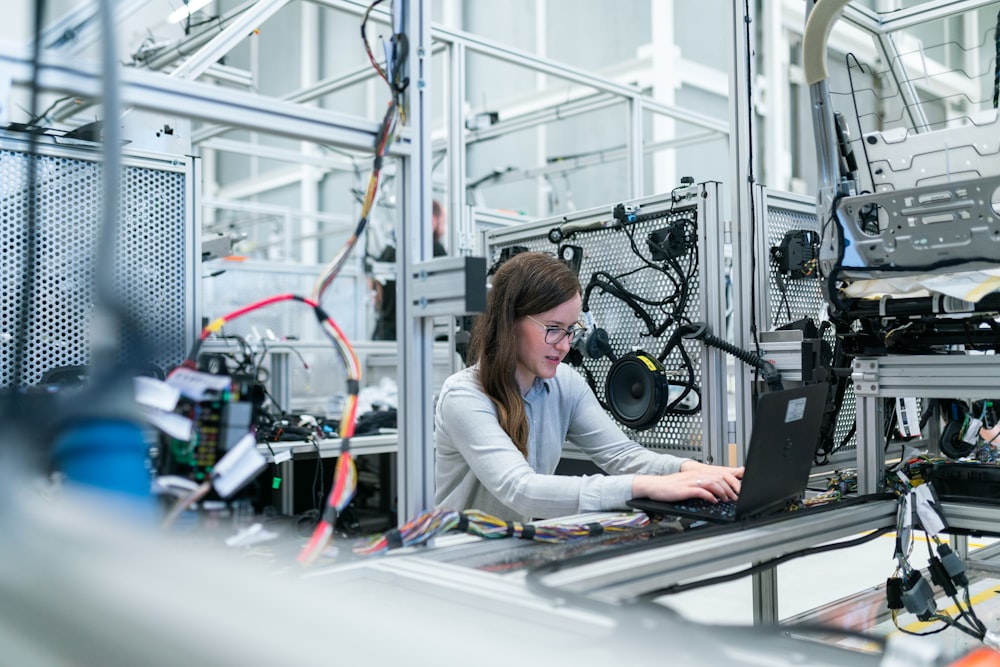

What is Control Systems?
Control Systems Engineering is a specialized branch of engineering that focuses on the mathematical modeling of diverse physical systems and the design of controllers that cause these systems to behave in a desired manner. It is an interdisciplinary field often found as a specialization within Electrical, Electronics, Instrumentation, and Mechanical Engineering.
Control systems are everywhere—from the simple thermostat in an air conditioner to the complex flight control systems in aerospace vehicles. In the era of Industry 4.0, control systems play a pivotal role in automation, robotics, and smart manufacturing. Students in this field learn about feedback loops, stability analysis, signal processing, and the implementation of controllers like PID, PLC, and SCADA systems.
Control Systems - Highlights
| Parameter | Details |
|---|---|
| Full Form | Control Systems Engineering |
| Course Levels Available | Diploma, B.Tech, B.E., M.Tech, M.E., Ph.D. |
| Duration | UG: 4 Years, PG: 2 Years, Diploma: 3 Years, PhD: 3-5 Years |
| Eligibility | UG: 10+2 with PCM (min 50-60%); PG: B.Tech/B.E. in relevant stream + GATE |
| Top Entrance Exams | JEE Main, JEE Advanced, GATE, MHT CET, BITSAT, WBJEE |
| Top Colleges | IIT Bombay, IIT Delhi, NIT Trichy, BITS Pilani, Jadavpur University |
| Average Fees Range (INR) | INR 50,000 to 15,00,000 |
| Average Salary (INR LPA) | INR 4.5 LPA to 22 LPA |
| Popular Job Profiles | Control Systems Engineer, Automation Engineer, Robotics Specialist, Research Scientist |
Control Systems - Eligibility Criteria & Admission Process 2026
The admission process for Control Systems courses in 2026 follows a merit-based approach through national and state-level entrance examinations.
- Undergraduate (B.Tech/B.E.): Candidates must have passed 10+2 with Physics, Chemistry, and Mathematics as core subjects. A minimum aggregate of 60% (55% for reserved categories) is typically required. Admission is primarily through JEE Main.
- Postgraduate (M.Tech/M.E.): Candidates must possess a B.E./B.Tech degree in Electrical, Electronics, Instrumentation, or Mechanical Engineering. A valid GATE 2026 score is mandatory for IITs and NITs.
- Diploma: Completion of Class 10 with Science and Mathematics is required, often followed by a state-level polytechnic entrance test.
- PhD: A Master's degree in a relevant engineering field with a high CGPA and qualification in exams like GATE or UGC NET.
Top Entrance Exams for Control Systems 2026
To secure admission in top-tier institutions for Control Systems, students must clear the following exams in 2026:
| Exam Name | Level | Target Course |
|---|---|---|
| JEE Main 2026 | National | B.Tech/B.E. (NITs, IIITs, GFTIs) |
| JEE Advanced 2026 | National | B.Tech (IITs) |
| GATE 2026 | National | M.Tech/Ph.D. (IITs, NITs, PSUs) |
| BITSAT 2026 | University | B.E. (BITS Pilani, Goa, Hyderabad) |
| MHT CET 2026 | State | B.E./B.Tech (Maharashtra Colleges) |
| COMEDK UGET 2026 | State | B.E./B.Tech (Karnataka Private Colleges) |
Types of Control Systems Courses (BTech, MTech, Diploma, PhD)
- Diploma in Control & Instrumentation: A 3-year course focusing on practical aspects of industrial hardware and basic control logic.
- B.Tech/B.E. in Electronics/Electrical (Control Specialization): A 4-year degree covering the foundations of linear systems, circuit theory, and basic automation.
- M.Tech/M.E. in Control Systems: A 2-year specialized program focusing on Advanced Control Theory, Robust Control, Nonlinear Systems, and Optimal Control. This is the most popular level for this specialization.
- PhD in Control Systems: Focused on research in areas like Adaptive Control, Neural Networks, and Quantum Control Systems.
Control Systems - Syllabus & Key Subjects
The syllabus for Control Systems is mathematically intensive and focuses on system dynamics. Key subjects include:
- Linear Control Theory: Transfer functions, Block diagrams, Signal flow graphs.
- Stability Analysis: Routh-Hurwitz criteria, Nyquist plot, Bode plots, Root Locus.
- State-Space Analysis: Controllability, Observability, and State-space representation.
- Digital Control Systems: Z-transforms, Discrete-time systems, and Sampled-data systems.
- Industrial Automation: Programmable Logic Controllers (PLC), SCADA, and Distributed Control Systems (DCS).
- Non-Linear Control: Describing functions and Phase-plane analysis.
Top Control Systems Colleges in India (Government & Private)
| College Name | NIRF Rank 2025 (Approx) | Ownership |
|---|---|---|
| IIT Madras | 1 | Government |
| IIT Bombay | 3 | Government |
| IIT Delhi | 2 | Government |
| NIT Trichy | 9 | Government |
| BITS Pilani | 25 | Private |
| Jadavpur University | 10 | Government |
| COEP Technological University, Pune | 73 | Government |
| Vellore Institute of Technology (VIT) | 11 | Private |
Control Systems - Career Scope, Salary & Job Profiles
Graduates in Control Systems have vast opportunities in sectors like Power Plants, Oil & Gas, Aerospace, Automotive, and Manufacturing. With the rise of Electric Vehicles (EVs) and Autonomous Systems, the demand is surging.
| Job Profile | Description | Average Starting Salary |
|---|---|---|
| Control Systems Engineer | Designs and implements control logic for industrial processes. | INR 5 - 8 LPA |
| Automation Engineer | Works on PLC/SCADA systems to automate production lines. | INR 4.5 - 7 LPA |
| Robotics Engineer | Develops control algorithms for robotic movement and sensing. | INR 6 - 12 LPA |
| Instrumentation Engineer | Focuses on the sensors and devices that provide data to control systems. | INR 4 - 6.5 LPA |
| Senior Research Scientist | Works on advanced R&D for defense or space applications. | INR 12 - 22 LPA |
Top Recruiters for Control Systems Graduates
Control Systems engineers are recruited by both Public Sector Undertakings (PSUs) and top-tier private multinational corporations:
- PSUs: ISRO, DRDO, BHEL, NTPC, GAIL, ONGC.
- Private Sector (Automation): Siemens, ABB, Rockwell Automation, Honeywell, Schneider Electric.
- Automotive & Aerospace: Tata Motors, Mahindra, Boeing, Airbus, Tesla (R&D).
- Tech & Consultancy: TCS, Infosys (Industrial IoT divisions), L&T Technology Services.
FAQs About Control Systems
Q: Is Control Systems a difficult branch of engineering?
A: It is considered mathematically challenging as it involves significant calculus, differential equations, and complex analysis. However, it is highly rewarding for those interested in logic and system design.
Q: Can I specialize in Control Systems after a B.Tech in Mechanical Engineering?
A: Yes, many M.Tech programs in Control Systems or Mechatronics accept Mechanical Engineering graduates, as control theory is vital for mechanical systems.
Q: What is the importance of GATE for this field?
A: GATE is crucial for pursuing M.Tech in top colleges like IITs and is also the primary gateway for recruitment into PSUs like BHEL and IOCL.
Q: Do I need to learn coding for Control Systems?
A: Yes, proficiency in MATLAB, Simulink, and Python is highly beneficial for modeling and simulation. Knowledge of C/C++ is useful for embedded control systems.
Q: What is the difference between Control Systems and Instrumentation?
A: Instrumentation focuses on the hardware and sensors that measure variables, while Control Systems focus on the algorithms and logic that process those measurements to adjust the system.
Q: Are there jobs in the EV sector for Control Systems engineers?
A: Absolutely. Control systems are essential for Battery Management Systems (BMS), motor control, and regenerative braking in Electric Vehicles.
Q: Which GATE paper should I appear for to study Control Systems?
A: You can appear for Electrical Engineering (EE), Electronics and Communication (EC), or Instrumentation Engineering (IN) papers.
Q: Is a PhD necessary for a good career in this field?
A: A PhD is recommended if you want to enter high-end R&D or academia. For industrial automation roles, an M.Tech or even a B.Tech with certifications is sufficient.
Interested in Control Systems?
Get access to top college comparisons, admission alerts, fee details, and expert counselling for Control Systems.